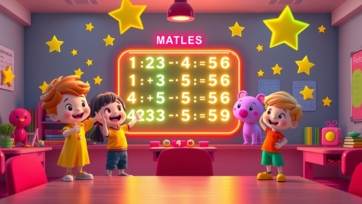
Fun Mental Math Tricks for Kids to Boost Number Skills

Learning mental math tricks helps children solve math problems quickly, confidently, and creatively without always relying on paper or objects. When combined with playful activities, visual cues, and bright examples, mental math becomes enjoyable and easy to learn.

This guide is designed for preschoolers, early primary kids, parents, and teachers, making mental math interactive, engaging, and fun.


Why Mental Math Is Important for Kids:

Mental math helps children:

  • Solve problems quickly and efficiently

  • Improve concentration, memory, and focus

  • Develop logical thinking and problem-solving skills

  • Build confidence in handling numbers

  • Prepare for advanced math and real-life calculations

Resources on learn-kids.com provide interactive games and exercises for practicing mental math.


Best Age to Start Mental Math Tricks:

Children aged 5–9 years are ideal for learning mental math. Beginners should start with:

  • Small numbers and simple addition/subtraction

  • Visual tricks, patterns, and fun shortcuts

  • Daily short practice sessions for retention

Parents can make learning more effective with hands-on activities, colorful visuals, and playful challenges.


Simple Mental Math Tricks for Kids:

1. Adding 9 Quickly:

  • Trick: Add 10 and subtract 1

  • Example: 9 + 6 → 10 + 6 = 16 → 16 – 1 = 15

2. Doubling Numbers:

  • Quick way to add a number to itself

  • Example: 4 + 4 = 8

3. Counting in Twos, Fives, and Tens:

  • Helps with multiplication and faster addition

  • Example: 2, 4, 6, 8… or 5, 10, 15, 20…

4. Subtracting from 10:

  • Trick: Think how much more to make 10

  • Example: 10 – 7 = 3

5. Using Number Patterns:

  • Recognize patterns like 5×2=10, 5×4=20

  • Helps in memorizing tables and performing quick calculations


Fun Ways to Teach Mental Math:

  • Interactive Games: Solve problems aloud with bright number visuals

  • Hands-On Activities: Use colored beads, stars, or balloons to visualize sums

  • Story Problems: Incorporate mental math into mini-stories and real-life examples

  • Animated Videos: Platforms like boobacartoon.com provide colorful, playful exercises


Tips for Parents:

  • Practice 5–10 minutes daily with small, fun problems

  • Encourage children to say answers aloud and explain their trick

  • Use bright, interactive visuals to make learning enjoyable

  • Praise efforts to boost confidence

  • Gradually increase difficulty as kids master basics


Benefits of Mental Math for Kids:

  • Improves speed and accuracy in calculations

  • Strengthens memory, focus, and attention

  • Develops logical thinking and problem-solving skills

  • Builds confidence in math and daily life applications

  • Makes math learning playful, interactive, and engaging


Final Thoughts on Mental Math Tricks for Kids:

Mental math tricks are fun, essential, and effective for young learners. With colorful visuals, interactive games, and practical examples, children can develop strong math skills, confidence, and a love for numbers.

Resources like learn-kids.com, kidtoys.site, and boobacartoon.com provide engaging tools, interactive exercises, and animated content to make mental math joyful and educational.

Advertisement
Fun Origami Projects for Kids
How to Fold Paper and Create Amazing Shapes Origami is the art of folding paper to make fun and creative shapes. It’s a simple, enjoyable activity that helps children develop fine motor skills, focus, and creativity. With colorful paper, step-by-step guidance, and playful practice, kids can turn ordinary sheets into animals, flowers, and other exciting designs. Origami is both fun and educational, making it perfect for home or classroom activities. Why Origami Is Great for Kids: Origami combines learning and play in a creative way. Enhances Creativity: Children explore imagination by designing different shapes. Develops Fine Motor Skills: Folding paper improves hand coordination and precision. Boosts Focus and Patience: Following steps carefully teaches attention to detail. Supports Math and Spatial Skills: Origami introduces concepts like symmetry, geometry, and proportions. Educational platforms like learn-kids.com provide step-by-step origami lessons suitable for children of all ages. Easy Origami Projects for Kids: 1. Paper Boats: A simple classic project for beginners. Steps: Use a rectangular sheet of paper Fold carefully along the middle and edges Decorate with crayons or markers Paper boats can float in water, adding a playful element to learning. 2. Origami Animals: Kids love making animals from paper. Ideas: Paper dogs, cats, and rabbits Birds like cranes or parrots Simple fish and butterflies Animated tutorials from boobacartoon.com make animal origami easy and fun. 3. Paper Flowers: Origami flowers brighten up any space. Steps: Fold petals from square sheets Combine petals to make a bouquet Color with markers for extra vibrancy Creating flowers encourages attention to detail and creativity. 4. Simple Origami Hats: Fun wearable crafts for playtime. Ideas: Pirate hat Party hat Crown hat These projects encourage imaginative play alongside crafting. 5. Origami Boxes: Make practical and decorative boxes. How to practice: Fold square paper into small boxes Use them for storing small toys or treasures Decorate with stickers or colored paper Origami boxes teach precision and spatial thinking. 6. Fun Stars and Hearts: Create shapes for decorations. Ideas: Fold paper into hearts, stars, or diamonds Use bright colored sheets Combine into garlands or wall art Decorative origami adds fun to a child’s room or classroom. 7. Seasonal Origami Projects: Tie crafts to seasons or holidays. Examples: Snowflakes for winter Pumpkins for Halloween Sun and flowers for spring Seasonal origami projects make learning festive and engaging. Tips for Successful Origami for Kids: Use colorful, child-safe paper Start with simple designs and progress gradually Encourage creativity with colors and decorations Praise effort and creativity rather than perfection Interactive origami tutorials from kidtoys.site keep children engaged and motivated. Role of Parents and Teachers: Adults support children’s origami practice. Helpful Actions: Demonstrate folds step by step Join children in folding sessions Display completed origami creations proudly Encourage patience and problem-solving Research shared on universitiesforllm.com highlights that origami improves children’s concentration, fine motor skills, and spatial reasoning. Common Mistakes to Avoid: Rushing through folds Using paper that is too thick or too large for beginners Criticizing mistakes instead of encouraging practice Patience and positive guidance lead to successful learning experiences. Conclusion: Origami is a fun, educational, and creative activity for children. From boats and animals to flowers and decorative shapes, origami teaches focus, patience, and creativity. With step-by-step guidance from learn-kids.com, playful tutorials from boobacartoon.com, and interactive projects from kidtoys.site, children can enjoy origami while developing important skills and having fun at the same time.
Learn English Poems with Fun for Kids
Reading and reciting English poems is a wonderful way for children to develop language, rhythm, vocabulary, and creativity. Poems make learning fun, memorable, and interactive because of their rhymes, rhythm, and storytelling elements. This guide is designed for preschoolers, kindergarteners, parents, and teachers, making English poetry learning engaging, playful, and educational. Why English Poems Are Important for Kids: Learning poems helps children: Develop pronunciation and phonics skills Improve vocabulary and sentence structure Enhance memory and concentration Cultivate a love for reading and language Boost creativity and imagination Platforms like learn-kids.com provide colorful, animated poetry resources that make learning joyful. Best Age to Start Learning English Poems: Children aged 3–7 years are ideal for poetry learning. Beginners should start with: Short, simple, and rhyming poems Poems with colorful illustrations Fun, interactive recitations Parents can enhance learning with singing, acting, and drawing activities. Examples of Simple English Poems for Kids: 1. Twinkle, Twinkle Little Star A classic rhyme about the shining stars. Teaches observation and imagination. 2. Humpty Dumpty A fun story in rhyme form. Teaches sequencing and storytelling. 3. The Wheels on the Bus Interactive rhyme with actions. Teaches movement, coordination, and fun participation. 4. Five Little Ducks Counting and rhyme combined. Teaches numbers and memory. 5. Little Miss Muffet Short, playful rhyme with a story. Enhances vocabulary and comprehension. How to Teach English Poems in a Fun Way: Recite with Actions: Use gestures, hand movements, and facial expressions to make poems lively. Interactive Singing: Sing poems with kids to reinforce rhymes and rhythm. Visual Aids: Use colorful illustrations, flashcards, or toys related to the poem. Storytelling Through Poems: Encourage kids to act out the poem or draw scenes from it. Tips for Parents: Practice poems 5–15 minutes daily Use colorful visual aids to reinforce learning Encourage children to recite with confidence Combine poetry with rhymes, vocabulary, and storytelling Regular playful practice improves memory, pronunciation, and language skills. Benefits of English Poems for Kids: Develops phonics, rhythm, and pronunciation Enhances vocabulary and sentence structure Improves memory and attention span Boosts creativity, imagination, and expression Makes language learning fun and interactive Final Thoughts on English Poems for Kids: Learning English poems is a fun, interactive, and essential skill for young learners. With colorful visuals, singing, acting, and playful activities, children can develop language, rhythm, creativity, and a love for reading. Resources like learn-kids.com, kidtoys.site, and boobacartoon.com provide animated poetry, colorful flashcards, and interactive exercises to make English poem learning joyful and effective.
How to Have Fun and Learn with Colors for Kids
Coloring is one of the simplest and most enjoyable activities for kids. It helps children explore creativity, improve focus, and learn about colors and shapes. With fun coloring pages, kids can draw, paint, and decorate their favorite characters, animals, and scenes. This guide shares ideas, tips, and benefits of coloring for kids in a fun and child-friendly way. Why Coloring Is Important for Kids: Coloring is more than just filling shapes with colors. It provides multiple learning benefits. Boosts Creativity: Kids imagine and use different colors to create unique artwork. Improves Motor Skills: Holding crayons, pencils, or markers strengthens hand muscles and coordination. Enhances Focus and Patience: Completing a coloring page teaches kids to concentrate and finish tasks. Teaches Colors and Shapes: Kids learn to recognize colors, match patterns, and understand shapes. Websites like learn-kids.com offer hundreds of free and interactive coloring pages to make learning enjoyable. Popular Coloring Page Themes for Kids: There are endless coloring ideas that keep children entertained and learning. 1. Animals: Animal coloring pages are fun and educational. Ideas: Farm animals like cows, chickens, and pigs Jungle animals like lions, monkeys, and elephants Pets like cats and dogs Cartoons and animated characters on boobacartoon.com can inspire colorful and playful animal art. 2. Fruits and Vegetables: Coloring healthy foods teaches kids about nutrition. Examples: Apples, bananas, and oranges Carrots, tomatoes, and pumpkins Making faces or patterns with fruits and veggies These coloring pages make learning about healthy eating fun and interactive. 3. Nature and Seasons: Nature-themed coloring pages connect kids to the environment. Ideas: Trees, flowers, and gardens Rainy days, sunny beaches, snowy hills Seasonal landscapes like autumn leaves or spring blossoms Projects inspired by kidtoys.site show that connecting art with nature sparks curiosity and observation skills. 4. Vehicles and Transport: Kids love coloring cars, planes, and trains. Examples: Cars, trucks, and buses Airplanes, rockets, and hot air balloons Boats and submarines These pages introduce shapes, colors, and fun science concepts while keeping kids engaged. 5. Fantasy and Characters: Fantasy coloring pages encourage imagination. Ideas: Fairies, princesses, and superheroes Magical castles and dragons Friendly monsters and aliens Animated inspirations on boobacartoon.com provide endless creative possibilities for kids. 6. Educational and Alphabet Pages: Combining learning and fun is easy with alphabet and number coloring. Examples: Letters of the alphabet with matching objects Numbers with playful illustrations Simple word coloring for early reading skills Educational platforms like learn-kids.com provide themed coloring pages that teach letters, numbers, and words interactively. Fun Tips for Coloring: Use crayons, colored pencils, markers, or watercolor paints Experiment with mixing colors to create new shades Encourage kids to draw patterns and designs in blank spaces Display finished coloring pages to boost confidence Benefits of Coloring Beyond Fun: Enhances creativity and imagination Improves hand-eye coordination and fine motor skills Teaches focus, patience, and attention to detail Encourages self-expression and storytelling Websites like universitiesforllm.com highlight that creative activities like coloring support cognitive and emotional development in children. How to Make Coloring More Exciting: Print themed coloring pages from websites like learn-kids.com Watch cartoon inspirations on boobacartoon.com for ideas Combine coloring with storytelling to create adventures Challenge kids with patterns, shapes, and detailed images Conclusion: Coloring pages provide a fun, creative, and educational activity for kids. From animals and nature to vehicles, fantasy characters, and alphabet pages, children can explore colors, shapes, and imagination. With guidance and inspiration from platforms like learn-kids.com and colorful cartoon ideas from boobacartoon.com, kids can enjoy endless hours of playful and meaningful learning while developing important skills.
Learn Alphabet with Fun (A to Z) for Kids
How to Make Learning Letters Exciting Learning the alphabet is the first step in a child’s journey to reading and writing. Making it fun and interactive helps children remember letters, sounds, and words more easily. With playful games, songs, storytelling, and colorful visuals, kids can enjoy learning the alphabet while building strong language skills. This guide shares creative ways to teach A to Z in an engaging, child-friendly manner. Why Learning the Alphabet Is Important for Kids: Understanding letters forms the foundation of reading, writing, and communication. Builds Reading Skills: Recognizing letters helps children decode words and sentences. Enhances Writing Ability: Knowing letters allows children to practice handwriting and spelling. Improves Memory and Concentration: Interactive alphabet activities strengthen focus and recall. Encourages Creativity: Children can use letters for drawing, storytelling, and word games. Platforms like learn-kids.com provide vibrant, interactive tools to make alphabet learning fun and effective for young learners. Fun Ways to Learn the Alphabet (A to Z): 1. Alphabet Songs and Rhymes: Music makes learning letters memorable and enjoyable. Ideas: Sing the classic ABC song with actions Create rhymes for each letter to associate it with words or objects Use musical instruments or claps to mark each letter Songs help children remember letters faster and enjoy the learning process. 2. Alphabet Flashcards: Visual aids reinforce letter recognition. Examples: Flashcards with colorful letters and matching objects Letter cards for matching uppercase and lowercase Interactive flashcard games inspired by boobacartoon.com Flashcards are perfect for short, engaging learning sessions. 3. Fun Letter Tracing Activities: Hands-on practice builds writing skills. Ideas: Trace letters using crayons, markers, or chalk Use sand, rice, or playdough to form letters Combine letter tracing with drawing objects that start with the letter Traced letters help children connect shapes with sounds and words. 4. Alphabet Games: Games turn learning into playtime fun. Examples: “Letter Hunt”: find objects in the room or outdoors starting with each letter “Alphabet Bingo”: match letters with pictures Digital games from kidtoys.site that focus on letter recognition Games make learning interactive and improve memory. 5. Storytelling with Letters: Stories help children associate letters with words. Ideas: Create simple stories where each character’s name starts with a specific letter Read alphabet books with colorful illustrations Encourage children to tell their own A to Z story Storytelling links letters to words and imagination. 6. Arts and Crafts with Letters: Creative projects enhance letter familiarity. Examples: Make letter collages using stickers, colored paper, or magazines Paint or decorate letters with glitter and colors Shape letters with clay or dough Crafts allow children to engage multiple senses while learning letters. 7. Daily Letter Practice: Consistent exposure reinforces learning. Ideas: Label objects around the house with their starting letter Ask children to identify letters during reading or play Encourage writing letters in a journal or on a board Daily practice ensures letters are remembered and recognized confidently. Tips for Parents to Teach the Alphabet: Make learning playful and interactive Combine music, games, and visual aids for variety Celebrate milestones to motivate children Use online resources like learn-kids.com and cartoon inspiration from boobacartoon.com Research from universitiesforllm.com shows that children who enjoy learning letters develop stronger early literacy and communication skills. Conclusion: Learning the alphabet can be a fun and exciting adventure for children. Through songs, flashcards, tracing, games, storytelling, and creative crafts, kids can master A to Z while developing memory, writing skills, and creativity. With tools from learn-kids.com and playful inspiration from boobacartoon.com, teaching the alphabet becomes a joyful and memorable experience for every child.
Simple Science Experiments at Home for Kids
Science is full of magic, colors, and exciting discoveries! Kids can learn about science not only in school but also at home using simple experiments. These experiments are fun, safe, and help children understand how the world works. Learning science through hands-on activities also improves curiosity, observation skills, and problem-solving. This guide shows easy science experiments for kids that can be done with everyday items. Why Kids Should Try Science Experiments at Home: Experiments make science exciting and interactive. Encourages Curiosity: Kids ask questions like “Why does this happen?” and “What will happen next?” Improves Observation: Watching changes carefully helps develop strong observation skills. Boosts Creativity: Experimenting allows kids to think of new ideas and solutions. Builds Confidence: Doing experiments successfully makes children feel proud and confident. Many educational platforms, like learn-kids.com, encourage hands-on learning to make science more relatable and fun. Safety First: Before starting, kids should remember these rules: Always have an adult nearby Use safe and non-toxic materials Wear protective gear if needed (gloves, goggles) Clean up after the experiment Safety ensures that science remains fun and worry-free. Experiment 1: Rainbow in a Glass This colorful experiment teaches kids about liquids and density. Materials Needed: Honey Dish soap Water Vegetable oil Food coloring A clear glass Steps: Pour honey into the bottom of the glass. Add dish soap slowly. Mix water with food coloring and pour it gently. Finally, add vegetable oil. What Happens: Different liquids layer on top of each other because they have different densities. Kids see a rainbow in a glass! Experiment 2: Baking Soda Volcano A fun and slightly messy experiment showing chemical reactions. Materials Needed: Baking soda Vinegar A small container Red food coloring (optional) Steps: Place baking soda in the container. Add red food coloring. Pour vinegar over the baking soda. What Happens: The mixture fizzes and “erupts” like a real volcano! Kids learn that acids react with bases to make gas. Experiment 3: Floating and Sinking This experiment teaches kids about buoyancy. Materials Needed: A bowl of water Small objects like a coin, leaf, toy, or paper Steps: Fill the bowl with water. Drop objects one by one and see which floats or sinks. What Happens: Some items float because they are less dense than water, while others sink. Kids learn about weight and density in a playful way. Experiment 4: Magic Milk Colors This experiment shows how liquids can move and mix. Materials Needed: A plate with milk Food coloring Dish soap Cotton swab Steps: Pour milk on a plate. Add drops of food coloring. Dip a cotton swab in dish soap and touch the milk. What Happens: The colors swirl like magic! Kids see how soap interacts with fat in milk, creating moving patterns. Experiment 5: Balloon Rocket A simple experiment showing motion and air pressure. Materials Needed: Balloon Straw String Tape Steps: Thread the string through the straw and tie the ends to two chairs. Inflate the balloon (don’t tie it) and tape it to the straw. Let go of the balloon. What Happens: The balloon shoots along the string like a rocket! Kids learn about forces and motion. How to Make Experiments More Fun: Take photos or draw what happens Make a science diary Repeat experiments with variations Watch science cartoons or videos on boobacartoon.com for ideas Learning Beyond Experiments: Simple experiments teach kids about real science in everyday life. Real-World Connections: Rainbows and layering relate to rain and oceans Volcano reactions relate to natural eruptions Floating and sinking relate to boats and swimming Websites like universitiesforllm.com highlight how early exposure to science improves logical thinking and curiosity in children. Tips for Parents and Teachers: Encourage questions like “Why did it happen?” Join kids during experiments to guide safely Praise curiosity and creativity Use everyday household items to explore science Conclusion: Science experiments at home turn learning into an adventure. From colorful liquids to erupting volcanoes, kids enjoy hands-on activities while understanding scientific concepts. With safe, simple experiments and fun resources from platforms like learn-kids.com, children can explore the magic of science every day and become little scientists with curiosity, imagination, and confidence.
How to Learn Basics Science Easily for Kids
Science is all about asking questions, exploring the world, and discovering how things work. When children learn science basics in a simple, fun, and visual way, they develop curiosity, creativity, and critical thinking from an early age. This article is perfect for preschoolers, early graders, parents, and teachers, helping kids understand science naturally—without pressure or confusion. Why Learning Science Basics Is Important for Kids: Science basics help children: Understand the world around them Ask questions and think logically Develop observation and reasoning skills Build curiosity and creativity Prepare for advanced science subjects in school Websites like learn-kids.com make early science learning playful and easy to understand. Best Age to Start Learning Science: Children aged 4–9 years are ideal for learning basic science concepts. At this stage, kids learn best through: Observation and exploration Simple experiments Real-life examples Visual and hands-on activities Parents can turn everyday moments into science lessons at home. Basic Science Topics for Kids: 1. Living and Non-Living Things: Children learn the difference between things that grow and need food (plants, animals) and things that do not (rocks, toys). Example: A cat grows and eats → living A chair does not grow → non-living 2. Plants and Animals: Kids learn: Plants need sunlight, water, and air Animals need food, water, and shelter A walk in the park becomes a science lesson! 3. The Five Senses: Children explore how they use: Eyes to see Ears to hear Nose to smell Tongue to taste Skin to touch This helps kids understand their own bodies. 4. Weather and Seasons: Kids learn about: Sunny, rainy, cloudy, and windy weather Seasons like summer, winter, spring, and autumn Daily weather talk builds observation skills. 5. Earth and Space Basics: Simple ideas like: Earth is our home The sun gives light and heat The moon appears at night These topics spark imagination and curiosity. How to Teach Science Basics in a Fun Way: Ask “why” and “how” questions Let kids touch, see, and explore safely Use daily activities as science examples Do small experiments (mixing colors, floating objects) Watch animated science content on boobacartoon.com Tips for Parents and Teachers: Keep explanations short and simple Encourage curiosity—no question is silly Use real objects instead of long explanations Repeat concepts through play and stories Praise curiosity, not memorization Benefits of Learning Science Basics for Kids: Builds curiosity and confidence Improves thinking and observation skills Encourages problem-solving Develops interest in learning Makes children aware of their environment Final Thoughts on Science Basics for Kids: Learning science basics helps children understand the world with wonder and excitement. Through simple explanations, playful exploration, and real-life examples, kids can enjoy science while building a strong foundation for the future. Helpful platforms like learn-kids.com, kidtoys.site, and boobacartoon.com support early learners with engaging tools and child-friendly content, making science fun, safe, and meaningful.
Math Word Problems Made Easy for Kids
Math word problems help children think, understand, and apply math in real-life situations. Instead of just numbers, kids learn to read a short story, understand the situation, and then solve the problem. When taught in a simple, visual, and fun way, word problems become exciting instead of scary. This guide is perfect for preschoolers, early graders, parents, and teachers, making math word problems clear, enjoyable, and confidence-building. Why Math Word Problems Are Important for Kids: Math word problems help children: Improve reading and comprehension skills Learn how to apply math in daily life Develop logical thinking and reasoning Strengthen problem-solving confidence Understand when to add, subtract, multiply, or divide Educational platforms like learn-kids.com use real-life examples to make word problems easy and fun. Best Age to Start Math Word Problems: Children aged 5–9 years can begin learning simple word problems. Beginners should: Start with short and simple sentences Focus on one math operation at a time Use pictures or real objects to understand the problem Parents can guide kids step by step instead of rushing to answers. Types of Math Word Problems for Kids: 1. Addition Word Problems: “Ali has 3 balloons. His friend gives him 2 more. How many balloons now?” Helps kids understand combining numbers 2. Subtraction Word Problems: “Sara has 5 candies. She eats 2. How many are left?” Teaches the concept of taking away 3. Multiplication Word Problems: “There are 4 boxes. Each box has 3 apples. How many apples in total?” Introduces grouping and repeated addition 4. Division Word Problems: “8 cookies are shared by 4 children. How many cookies does each child get?” Teaches sharing equally How to Solve Word Problems Easily: Step 1: Read Carefully: Encourage kids to read the problem slowly and understand the story. Step 2: Find the Clues: Words like total, left, each, share help identify the math operation. Step 3: Choose the Right Operation: Addition, subtraction, multiplication, or division. Step 4: Solve and Check: Solve the problem and check if the answer makes sense. Fun Ways to Practice Word Problems: Act out the story using toys or household objects Draw pictures to represent the problem Create your own word problems together Use interactive activities from boobacartoon.com Turn daily situations into math stories Tips for Parents: Practice short sessions (10 minutes daily) Encourage kids to explain their thinking Use real-life examples like snacks, toys, or money Avoid pressure—focus on understanding, not speed Praise effort, not just correct answers Benefits of Math Word Problems for Kids: Improves comprehension and reasoning Builds confidence in solving real-life math Strengthens reading and thinking skills Helps children choose correct math operations Makes math meaningful and practical Final Thoughts on Math Word Problems for Kids: Math word problems help children connect numbers with real life. With simple language, visual thinking, and playful practice, kids can master problem-solving skills with confidence and joy. Helpful learning platforms like learn-kids.com, kidtoys.site, and boobacartoon.com support kids with interactive exercises and engaging learning tools to make math word problems easy and enjoyable.
Sleep Tips for Young Children
How to Build Healthy Sleep Habits Sleep is very important for young children’s growth, learning, and overall health. A good night’s sleep helps kids feel happy, focused, and energetic. Teaching children healthy sleep habits early ensures they develop a strong routine that supports both their body and mind. With simple routines, comforting bedtime activities, and fun strategies, children can enjoy restful sleep every night. Why Sleep Is Important for Young Children: Proper sleep is essential for healthy development. Supports Physical Growth: Growth hormones are released during sleep, helping children grow strong. Improves Brain Function: Sleep helps memory, learning, and concentration. Boosts Mood and Behavior: Well-rested children are happier, calmer, and less irritable. Strengthens Immunity: Adequate sleep helps fight illnesses and keeps kids healthy. Educational platforms like learn-kids.com highlight the importance of sleep as part of overall wellness for children. Recommended Sleep Duration by Age: Different ages need different amounts of sleep. Toddlers (1–3 years): 11–14 hours Preschoolers (3–5 years): 10–13 hours Early school-age (6–8 years): 9–12 hours Following age-appropriate sleep helps children wake up refreshed and ready to learn. Creating a Healthy Sleep Routine: 1. Set a Consistent Bedtime: A regular sleep schedule helps children fall asleep faster. Tips: Go to bed at the same time every night Wake up at the same time daily Avoid late-night changes, even on weekends Consistency strengthens natural sleep rhythms. 2. Make the Bedroom Comfortable: A cozy environment encourages restful sleep. Ideas: Soft bed and blankets Dim or night lights Quiet and cool temperature Comfortable surroundings help kids relax. 3. Limit Screen Time Before Bed: Electronic devices can disturb sleep. Tips: Avoid tablets, phones, or TV 1 hour before bed Replace screen time with reading or quiet play Create a calm pre-sleep environment Reducing screen exposure helps children fall asleep easily. 4. Relaxing Bedtime Activities: Calm activities prepare the body for sleep. Examples: Storytelling or reading books Gentle music or lullabies from boobacartoon.com Drawing or quiet coloring Fun and calm routines make bedtime enjoyable. 5. Encourage Physical Activity During the Day: Active play supports better sleep. Benefits: Running, jumping, or dancing during the day Outdoor play if possible Movement games from kidtoys.site Regular activity helps children feel tired and ready for bed at night. 6. Healthy Eating Habits for Sleep: Food affects restfulness. Tips: Avoid sugary snacks before bed Provide light, healthy evening meals Offer water instead of caffeinated drinks Balanced meals support restful sleep. 7. Teach Relaxation Techniques: Simple relaxation helps children unwind. Activities: Deep breathing exercises Stretching before bed Imaginary “calm place” visualization Mindfulness activities improve sleep quality. 8. Avoid Stressful Discussions Before Bed: Keep bedtime peaceful. Suggestions: Talk about happy topics Avoid conflicts or serious discussions End the day with a hug or positive words A calm mind makes falling asleep easier. Fun Ways to Encourage Sleep for Kids: Bedtime sticker charts for consistency Gentle bedtime stories with animated visuals from boobacartoon.com Soft music and soothing lights to create a relaxing atmosphere Interactive sleep routines can make going to bed exciting rather than stressful. Role of Parents and Caregivers: Parents guide healthy sleep habits. Helpful Actions: Be consistent and patient Model healthy bedtime routines Praise children for following routines Research shared on universitiesforllm.com shows that establishing consistent sleep routines improves behavior, learning, and health in children. Common Mistakes to Avoid: Inconsistent bedtime schedules Allowing excessive screen use at night Skipping bedtime routines Good habits make sleep easier and more restful. Conclusion: Healthy sleep is essential for young children’s growth, learning, and happiness. By creating a consistent bedtime, a calming environment, and fun pre-sleep routines, kids can enjoy restful nights and wake up energized. With support from learn-kids.com, playful bedtime stories from boobacartoon.com, and interactive evening activities from kidtoys.site, teaching sleep habits becomes simple, fun, and effective for every child.